
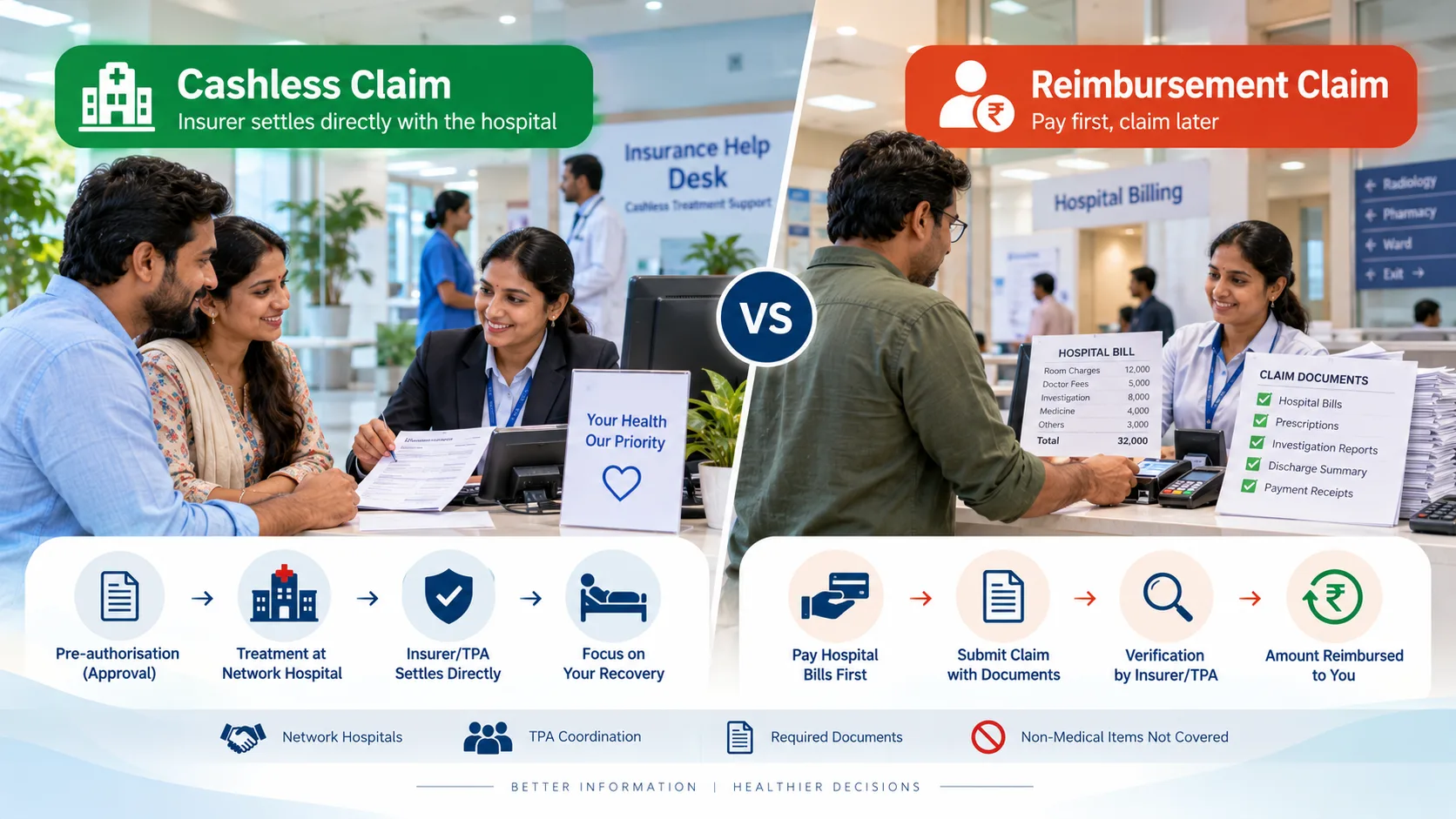
Most disputes over a health insurance claim come from one misunderstanding at admission: the family assumes the insurer will handle everything, and then finds out at discharge that they have to pay the bill and claim it back. Knowing which of the two routes you are on, before the admission if possible, changes how the whole episode goes.
Cashless claims
In a cashless claim the insurer or its TPA settles the approved amount directly with the hospital. You pay only what falls outside the policy. This route generally requires the hospital to be in your insurer network, and it requires pre-authorisation, which is the hospital sending the medical details and estimated cost for approval before or shortly after admission.
Regulators have pushed insurers to extend cashless beyond fixed network lists, so cashless at a non-network hospital is possible in some situations, subject to the insurer agreeing and the hospital being willing to coordinate. Do not assume it. Confirm it.
Reimbursement claims
Here you pay the hospital yourself and file a claim afterwards with the bills and documents. It is slower and it puts the money pressure on you, but it works at any hospital as long as the treatment is covered. For emergencies far from home, or at a hospital that is not empanelled, this is often the only route available.
Documents to collect before you leave
- Discharge summary signed by the treating doctor
- Itemised final bill, not a summary bill
- Payment receipts for every amount paid
- All investigation reports and imaging
- Pharmacy bills with the prescriptions attached
- Implant sticker and invoice, if any implant was used
Getting a duplicate of any of these after discharge is far harder than asking for it at the billing counter while you are still there.
What usually is not paid
Policies commonly exclude a list of non-medical items: gloves, syringes billed separately, admission and registration charges, attendant food, and similar consumables. The hospital bills them to you and the insurer declines them. This is normal and is not a rejection of your claim.
If a claim is denied
- Ask the insurer for the denial reason in writing, quoting the policy clause.
- Check that clause against your own policy document.
- File a grievance with the insurer and note the reference number.
- If unresolved, escalate through the regulator grievance portal or to the Insurance Ombudsman.
Read the waiting periods and the pre-existing disease clause in your own policy once, calmly, before you ever need to claim. Nearly every denial that surprises a family is written somewhere in that document.