
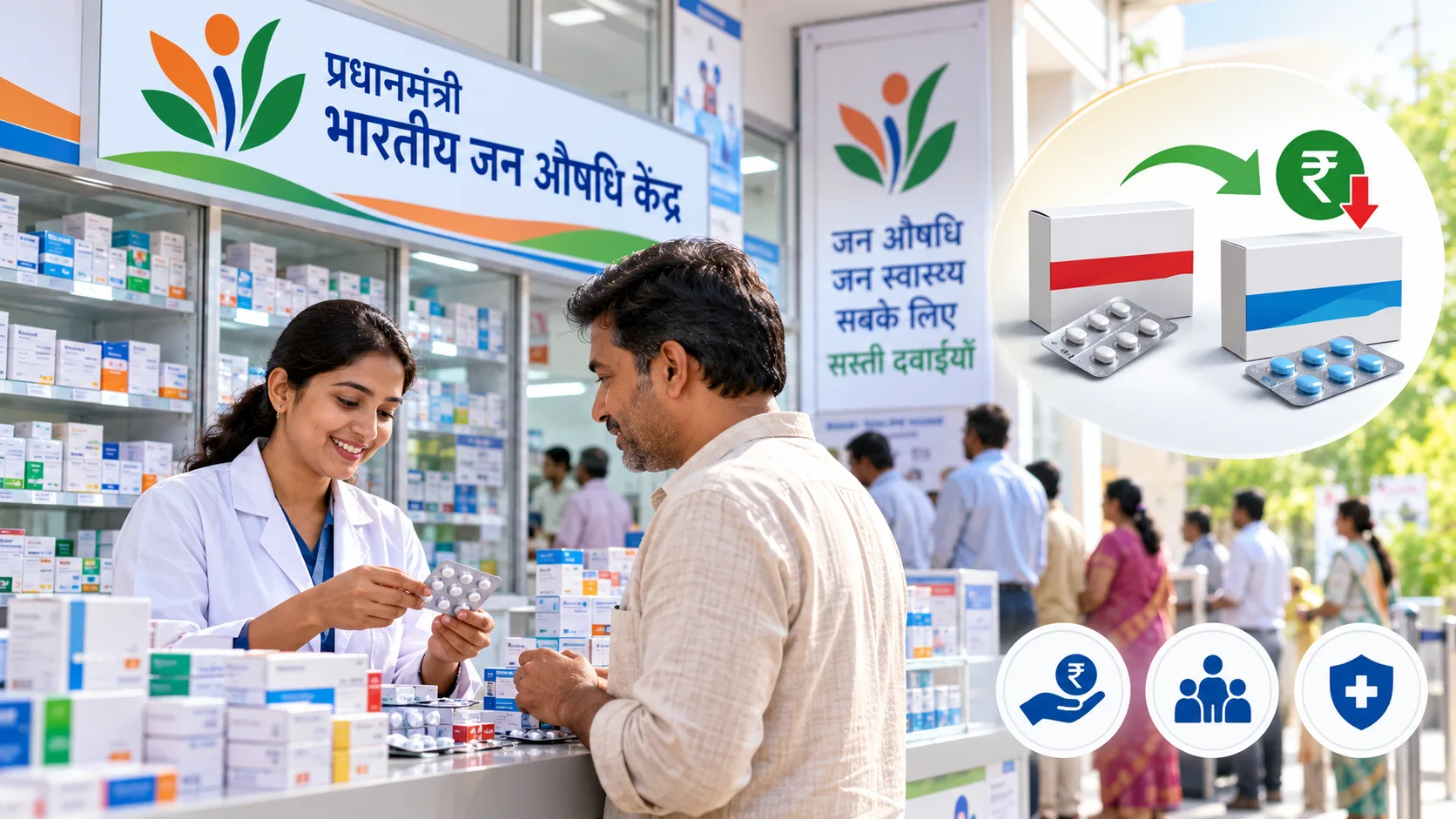
A large part of what an Indian family spends on health goes on medicines bought out of pocket, month after month, for conditions like diabetes, blood pressure and thyroid. Jan Aushadhi Kendras exist to bring that number down by selling generic medicines at capped prices.
What a generic medicine actually is
Every medicine has an active ingredient, often called the salt. Paracetamol is a salt. The many brand names it is sold under are marketing names for the same molecule. A generic medicine sells that molecule without the brand premium. It is not a different or weaker medicine, and it is not an alternative system of medicine.
Finding a kendra near you
Kendras are spread across districts, often inside or near government hospital campuses, and increasingly in ordinary market areas. The official portal has a locator that works by state, district and pin code. If you are managing a long term prescription, it is worth finding the two or three closest to you once, and saving the addresses.
What to ask for at the counter
- Hand over the prescription and ask for the generic equivalent of each item.
- If the doctor wrote only a brand name, ask the pharmacist to identify the salt.
- Confirm the strength — 500 mg and 650 mg of the same salt are not interchangeable.
- Ask what is not in stock, so you can buy the remaining items elsewhere in one trip.
What to check before you leave
- Expiry date printed on the strip, not just on the outer box
- Batch number, in case a recall or a complaint comes up later
- The salt name and strength, matched against the prescription
- A printed bill — this matters for insurance claims and for any complaint
Where to be careful
Do not stop, substitute or change the dose of a prescribed medicine on your own judgement. For most common medicines a generic substitution is routine, but there are categories where doctors prefer to keep a patient on the same manufacturer, and only the treating doctor knows whether yours is one of them. Ask, then switch.
If you are buying for an elderly parent who manages their own medicines, take a photo of the old strip and the new one side by side. Changing the look of a daily tablet is one of the most common causes of missed and doubled doses.